CAP Fellowship Programs
National Resident Match Program (NRMP) Match Data
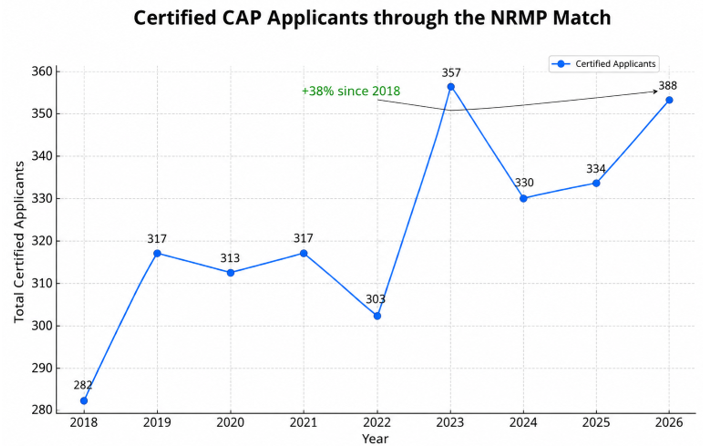
The NRMP Match oversees the Specialties Matching Service® (SMS®), which facilitates fellowship matches across more than 70 subspecialties, including child and adolescent psychiatry (CAP). In 2026, 343 residents out of 388 applicants (88%) successfully matched into child and adolescent psychiatry (CAP) fellowship programs through the NRMP Match. Of the 127 certified CAP fellowship programs, 73% filled all available positions, and overall, 86% of available fellowship positions were filled.
The number of CAP fellowship programs being filled through the NRMP specialty match has remained relatively steady in recent years, with a slight increase in 2026 to over 70% of the available positions filling. (Figure 1). CAP match rates have remained stable since 2018, with a slight decrease in 2026 (see Figure 2). Since 2018, there has been a 38% increase in the number of applicants to CAP fellowships participating in the NRMP Match process as shown in Figure 3.
Figure 1.
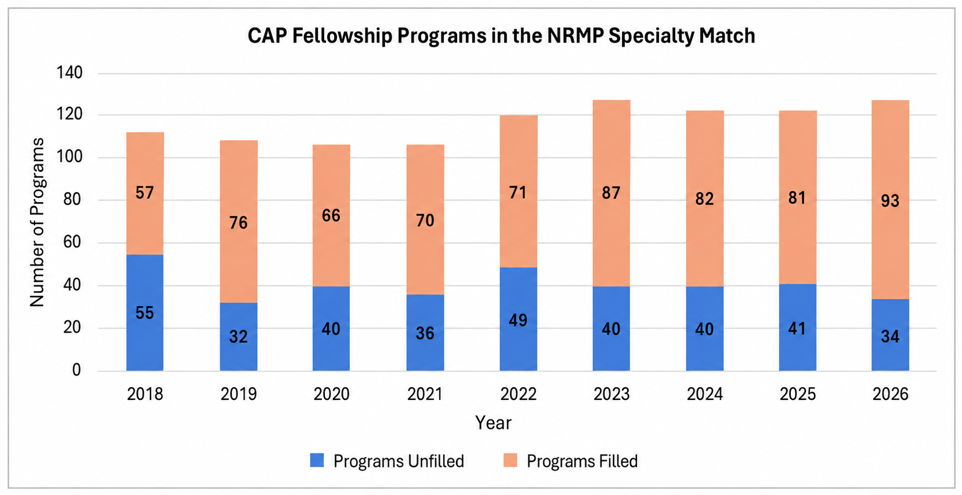
Figure 2.
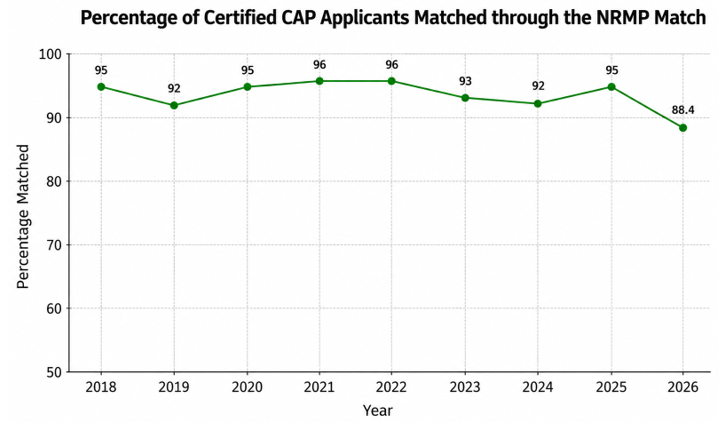
Figure 3.
Accreditation Council for Graduate Medical Education (ACGME) Data
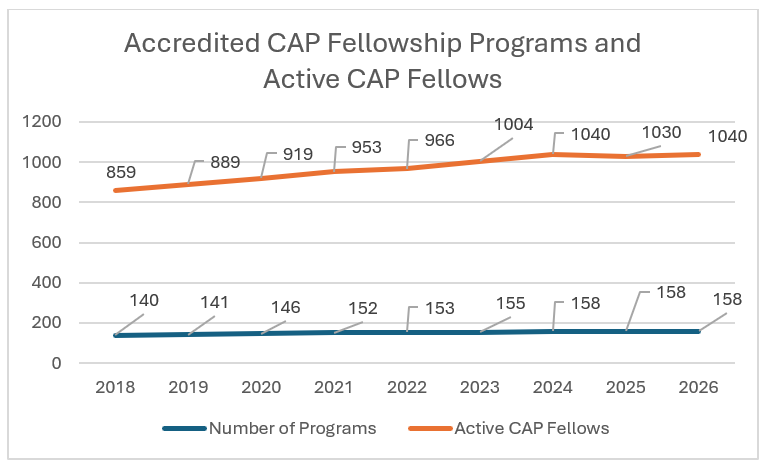
The ACGME oversees the accreditation of residency and fellowship programs in the US. ACGME tracks data on all accredited CAP fellowship programs, regardless of whether they participate in the NRMP Match. Steady growth in the CAP subspecialty is demonstrated in the ACGME data. The overall number of ACGME-accredited CAP fellowship programs rose by 13% from 2018 to 2026 (Figure 4). Additionally, the number of active CAP fellows increased by approximately 21% from 2018 to 2026.
Figure 4.