|
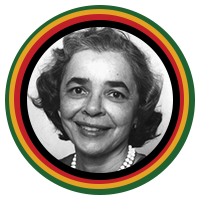
Dr. Hamburg was one of the first African American students to attend Vassar College, and the first African American woman to graduate from Yale School of Medicine. Dr. Hamburg led a long and fruitful career spent in part in the psychiatry departments of Stanford, Harvard, Mount Sinai, Icahn School of Medicine, and Weill Cornell Medical College.
Her primary focus was on the stages of adolescence and the struggles these stages present. She greatly advanced the concept of peer counseling for teens and was recognized as one of the nation's top experts on the problems of adolescence and its different stages.
She and her husband David A. Hamburg also researched the effects of stress and related coping mechanisms, focusing on the psychological effects of poverty and war. Together, they co-authored the book Learning to Live Together: Preventing Hatred and Violence in Child and Adolescent Development.
Dr. Hamburg was an AACAP Life Fellow and AACAP's , MD, is named in her honor.
Read more about her life.
|
|
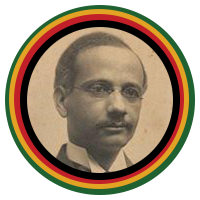
Dr. Fuller was the first African American psychiatrist in the United States. His work focused on degenerative diseases of the brain, and he made immense contributions to the study of Alzheimer's disease.
Dr. Fuller's grandfather was formerly enslaved in Virginia. He bought his and his wife's freedom and moved to Norfolk, Virginia before emigrating to Liberia in 1852 as a medical missionary. Inspired by their work, Dr. Fuller emigrated to the US in 1889 to study at Livingstone College in Salisbury, North Carolina, before attending Long Island College Medical School. He later completed his medical degree at the Boston University School of Medicine.
After interning at Boston's Westborough State Hospital, he joined the staff as a pathologist. Despite discrimination in the field, Dr. Fuller used discoveries he made during autopsies to advance his career and, in 1903, was one of five students chosen by Alois Alzheimer to study at the Royal Psychiatric Hospital at the University of Munich.
Dr. Fuller also worked on health education and awareness campaigns for syphilis and advocated on behalf of Black war veterans who were deemed ineligible for military benefits due to misdiagnoses. In 1974, the Black Psychiatrists of America created the Solomon Carter Fuller Program for young Black aspiring psychiatrists to complete their residency.
Read more about his life.
|
|
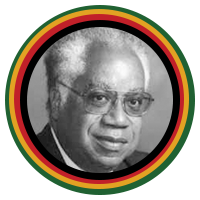
Dr. Joseph White is known as the godfather of Black psychology for his exposure of the implicit biases in medical systems.
In 1962, White earned a PhD in psychology from Michigan State University, becoming one of the first Black psychologists in the United States. He later founded California's Educational Opportunity Program, which provides access to education and other opportunities to low-income or otherwise educationally-disadvantaged students in the state. Dr. White helped found the Association of Black Psychologists in 1968 and was a life-long advocate of education reform.
Read more about his life.
|
|
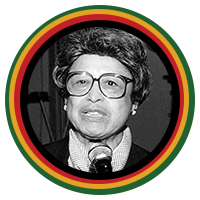
Dr. Spurlock was a child and adolescent psychiatrist, professor, author, and researcher who specialized in treating Black women and children. Her work paved the way for women in the science, technology, engineering, and math (STEM) fields.
Dr. Spurlock attended Spelman College in Atlanta, GA, then entered medical school at Howard University College of Medicine, graduating in 1947. After residency and several years of private practice, Dr. Spurlock was appointed Chief of the Child Psychiatry Clinic at the Michael Reese Hospital in Chicago. Additionally, she served as Director of the Children’s Psychosomatic Unit of the Neuropsychiatric Institute of the University of Illinois, was the deputy medical director of the American Psychiatric Association for 17 years, and chaired the Department of Psychiatry at Meharry Medical College.
In 1971, Dr. Spurlock became the first African American and the first woman to win the Edward A. Strecker, MD, Award for outstanding contributions to the field of clinical psychiatry. Her many research papers and presentations covered topics such as single parent families, trends in US policy and the consequences for African Americans, and black children in education.
Read more about her life.
|
|
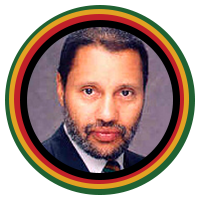
Dr. Bell was a distinguished psychiatrist, violence-prevention crusader, and expert on the impact of violence on children in disadvantaged communities.
Hailing from Chicago, Dr. Bell graduated with his medical degree from Meharry Medical College before continuing with his postgraduate studies at the Illinois State Psychiatric Institute. After serving in the US Navy, he returned to the South Side of Chicago to work in an under resourced African-American community. As the longtime CEO of the Community Mental Health Council, Dr. Bell treated a population beset by interpersonal violence, childhood trauma, misdiagnosis, and systemic discrimination.
Dr. Bell was an author, a researcher, and a professor of psychiatry, and served as the chairman of the National Medical Association's Section on Psychiatry. His work has shaped how the field addresses trauma-informed care, social determinants of health, culturally-sensitive care, and the real-world effectiveness of psychiatric treatment.
Read more about his life.
|
|
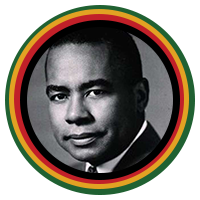
Dr. Cornely was a public health pioneer and a passionate advocate for civil rights and became highly visible in the 1950's for his role in the civil rights movement.
Dr. Cornely was the first African American medical student elected to the Alpha Omega Alpha Honor Society at the University of Michigan School of Medicine, and the first African American public health student to earn his doctorate in the field. After graduating university, he went on to serve as president of the Pro-National Health Insurance Physician's Forum, and to chair the Medical Care Section of the American Public Health Association (APHA), later serving as president. He was the first African American person to serve in any of these positions.
Throughout his long career as a teacher and researcher, Dr. Cornely advocated for the desegregation of US health facilities. In 1963 he served as the local medical coordinator for the August 28 March on Washington, and in 1966, he began a two-year term as a member of the APHA's Committee on Integration in Health Services.
Read more about his life.
|
|
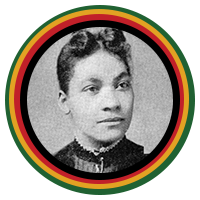
Dr. Crumpler challenged the prejudice that prevented African Americans from pursuing careers in medicine to become the first African American woman in the US to earn a medical degree.
As a child, Dr. Crumpler accompanied her aunt through local towns, ministering to the sick. That experience led her to a career in medicine, beginning as an (untrained) nurse, assisting doctors in the Boston area. In 1860, Crumpler became the first African American woman accepted to the New England Female Medical College in Boston (the school later merged with Boston University Medical School).
After more than 20 years of practicing medicine, Dr. Crumpler published a book based on her extensive journal notes. A Book of Medical Discourses is believed to be the first medical text written by an African American author.
Read more about her life.
|
|
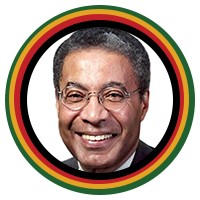
Dr. Alvin Poussaint played a leading role in debates about Black culture and politics in the 1980s and ’90s through his research on the effects of racism on Black mental health.
Dr. Poussaint, who spent most of his career as a professor and associate dean at Harvard Medical School, first came to prominence in the late 1970s, as the energy and optimism of the civil rights movement were giving way to white backlash and a skepticism about the possibility of Black progress in a white-dominated society.
Through extensive research and jargon-free prose, Dr. Poussaint recognized the continued impact of systemic racism while also calling for Black Americans to embrace personal responsibility and traditional family structures. That position, as well as his polished charisma, made him a force in Black politics and culture.
He served as Massachusetts co-chairman for Rev. Jesse Jackson Sr.’s 1984 presidential campaign and was the model for Dr. Cliff Huxtable on Bill Cosby’s sitcom “The Cosby Show.”
Read more about his life.
|
|
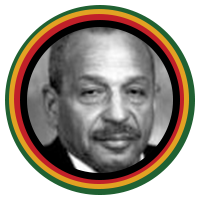
Dr. Maultsby was an influential psychiatrist and noted family physician who became well known for his expertise in cognitive-behavioral therapies.
After earning his MD from Case Western Reserve University and serving as a general practitioner for several years, he completed his Psychiatric Residency at the University of Wisconsin. There, he developed his own cognitive-behavioral therapy and founded the Training and Treatment Center for Rational Behavior Therapy (RBT). The first of its kind, Rational Behavior Therapy was specifically designed to be comprehensive, short-term, culture-free, non-pharmacological, both therapeutic and preventative, and as a pathway of self-development.
After publishing his seminal RBT manual in 1984, Dr. Maultsby became the Chair of Howard University’s Department of Psychiatry in 1989 and was given the title of Emeritus Professor in 2004. In 2011, Maultsby also became a Professor in the Psychiatry Residence Training Program at Saint Elizabeth’s Hospital in Washington DC. He was elected Distinguished Life Fellow of the American Psychiatric Association and was the recipient of the Lifetime Achievement Award from the National Association of Cognitive-Behavioral Therapists.
Read more about his life.
|
|
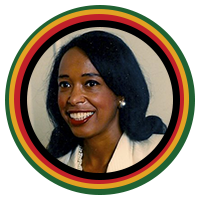
Dr. Bath was a trailblazing physician, researcher, and advocate whose work transformed the field of ophthalmology. She gained international recognition for developing a laser-based technique for cataract treatment that led her to become the first Black woman physician to receive a US medical patent.
A gifted student, Dr. Bath completed high school in just two and a half years before enrolling at Hunter College in New York City to study chemistry and physics. She went on to earn her medical degree from the Howard University College of Medicine in 1968. Following her ophthalmology residency at Columbia University, Dr. Bath began her clinical career, where she observed stark racial disparities in eye health and access to expert care.
Motivated to address these inequities, she developed the concept of “community ophthalmology,” mobilizing volunteers to provide basic eye care, screenings, and health education to under-resourced populations in the US and around the world. In 1977, she co-founded the American Institute for the Prevention of Blindness (AIPB), which championed the principle that “eyesight is a basic human right.”
During the 1980s, Dr. Bath’s focus shifted to developing new techniques to treat cataracts, one of the leading causes of blindness. On May 17, 1988, she received U.S. Patent No. 4,744,360 for her invention of the Laserphaco Probe, a device that transformed cataract surgery and cemented her place in medical history.
Throughout her career, Dr. Bath challenged racial and gender barriers in science and medicine, paving the way for future generations. Her legacy of advocacy and innovation continues through her daughter, Eraka Bath, MD, a nationally recognized child and adolescent psychiatrist and proud AACAP member.
Read more about her life.
|