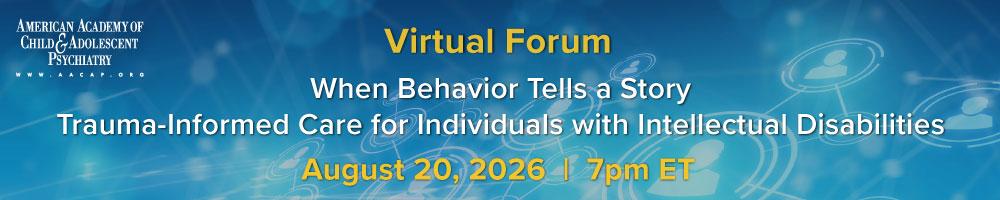
This forum is co-sponsored by AACAP’s Maltreatment Committee, Diversity and Culture Committee, and Autism & Intellectual Disability Committee.
Individuals with autism and intellectual and developmental disabilities (I/DD) face an elevated risk of trauma exposure, yet trauma in this population is often misread. Anxiety, aggression, withdrawal, or regression can be mistaken for features of the disability itself rather than recognized as trauma responses, a pattern known as diagnostic overshadowing that leaves many individuals underassessed and undertreated.
This virtual forum will examine how trauma manifests differently in individuals with autism and I/DD compared to neurotypical populations, and what that means for accurate assessment and care planning. Presenters will discuss adaptations to traditional trauma screening and therapeutic approaches that account for communication, sensory, and cognitive differences, with particular attention to building safe, predictable environments and consistent, trusting relationships. Case examples will illustrate both challenges and successful interventions across schools, healthcare settings, and community-based services.

Learning Objectives:
- Discuss the prevalence and types of trauma experienced by individuals with autism and intellectual and developmental disabilities
- Explain how trauma may manifest differently compared to neurotypical populations
- Identify barriers to diagnosis and treatment, including diagnostic overshadowing
- Learn strategies for providing trauma-informed, person-centered care
Panelists

Ilana Slaff-Galatan, MD
St. Joseph's Medical Center-Yonkers/Garnet
Health Medical Center

Kari Harper, MD
Wright State University

Jennifer McLaren, MD
Dartmouth Hitchcock Medical Center
Moderator

Ciara Styles, MD
Talkiatry